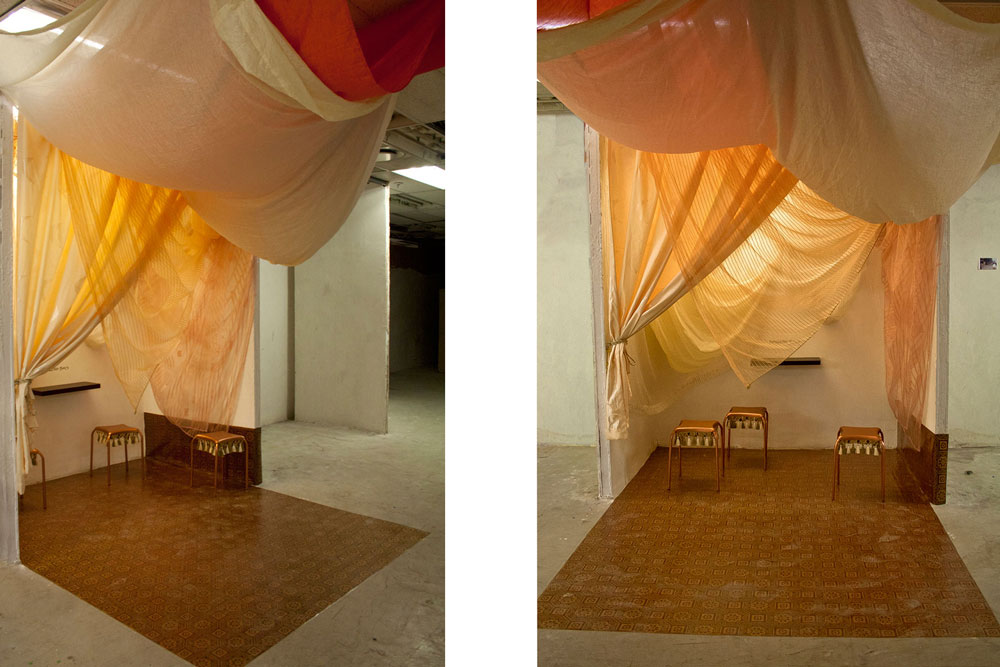
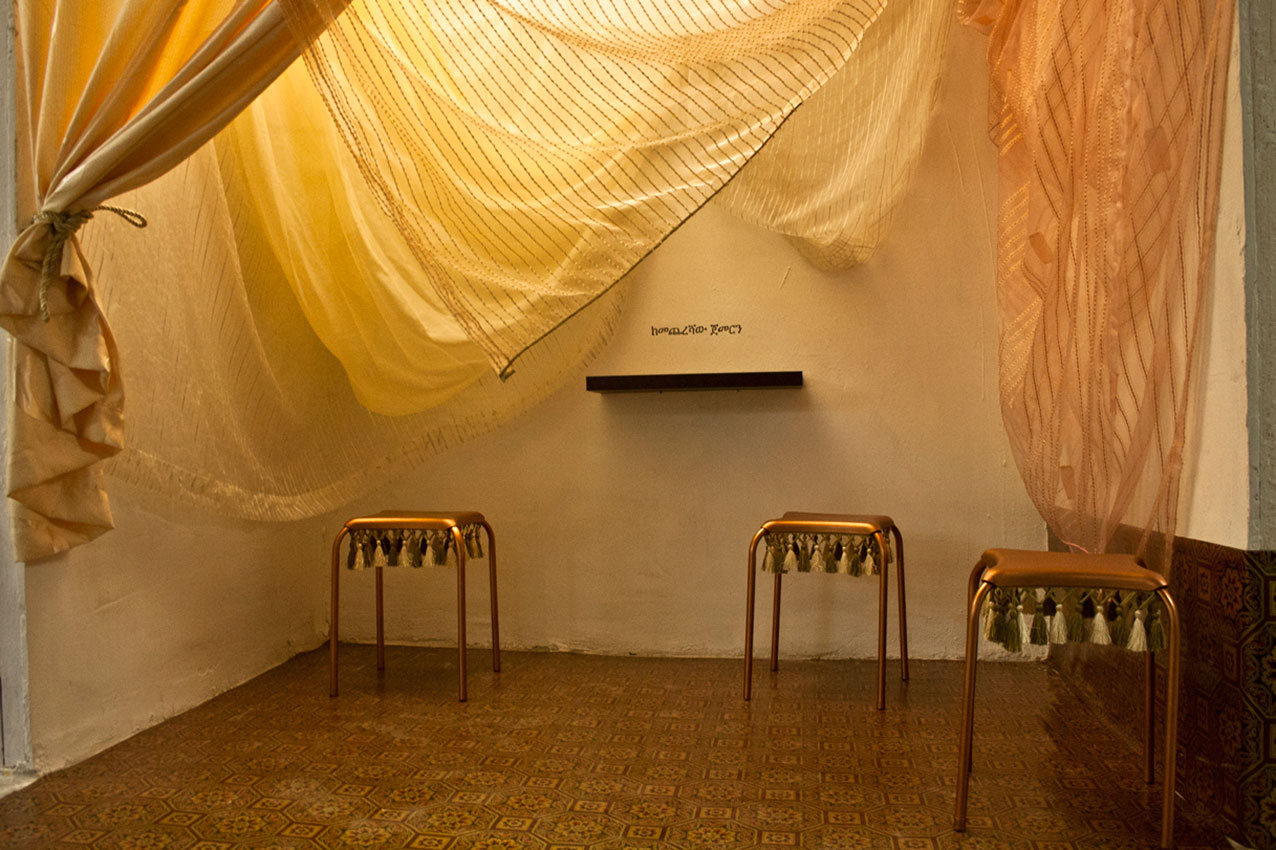
Jeppe Street Conversation Room, 2011. Intervention in building on Jeppe Street, Johannesburg.
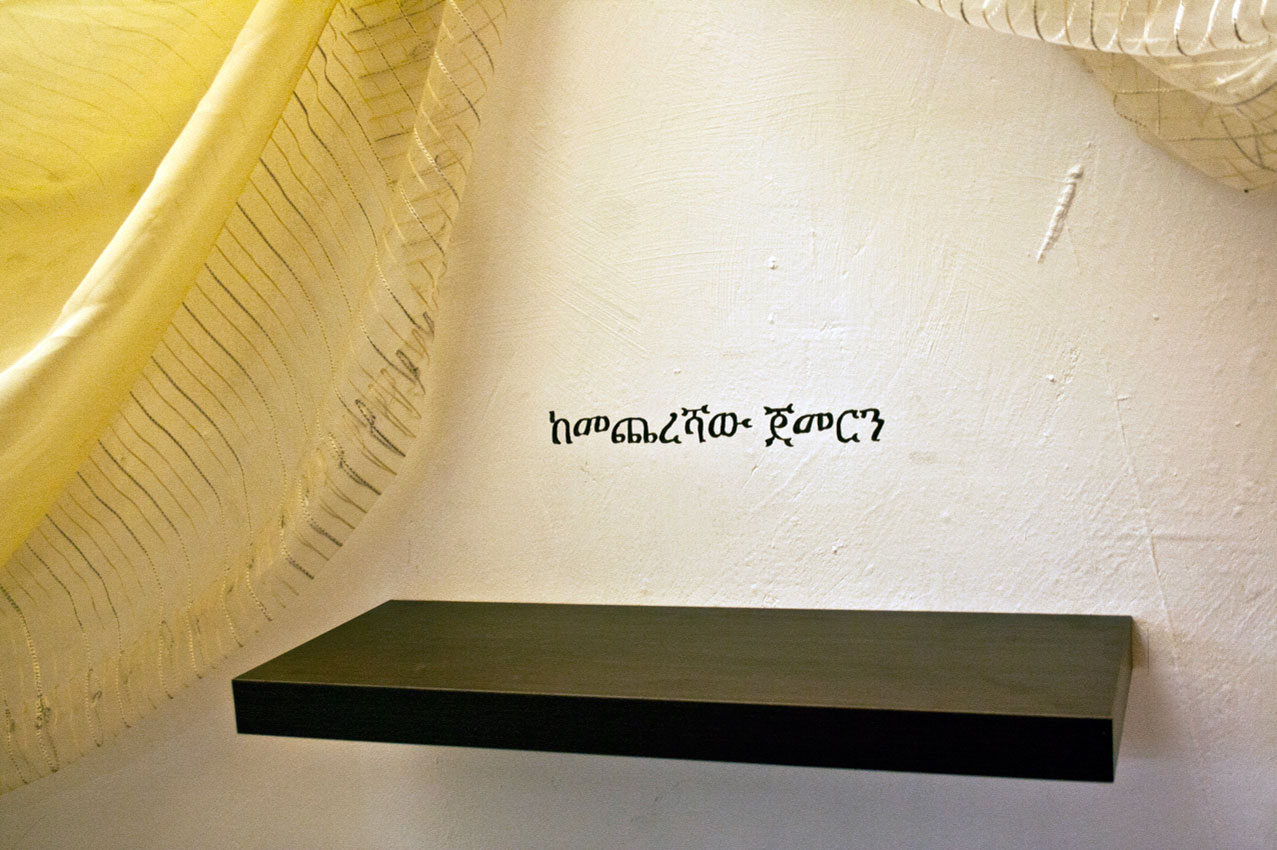
It was important during the research project to respond to the area and the people who worked there by listening to their personal stories, accounts or anecdotes of their experience. I attempted to create a ‘conversation room’ where people who use the building can stop to rest. The words “start at the end” were translated into Amharic, a common language in the area, which I copied onto the wall above the shelf.
“This research project intends to establish the basis for the collection of research, employing an interdisciplinary framework between fine arts practice and ‘anthropological’ observer-participation and in the interaction with the parallel architectural and legal parts of the project. The basic aim is that a set of questions will emerge around the area, its networks and self-imaginary that begin to ask where art practice can inform or situate itself in relationship to an increased understanding of everyday urban practices as ‘systems of knowledge’, in relation to the notion of cityness as just, democratic, imaginative and globalised… In essence, the research questions evolve around the shifting relationship between ‘space’ and ‘narrative’, as constitutive of the area as a site and its occupants and their networks, as well as the spatial strategies or tactics of situated or site-specific artistic practice. The mode of ‘the narrative’ can be understood to include not only a story that is told, but spatial relations between streets and buildings, movements between shops and restaurants, visual recordings, written messages or the journey of a container of goods. Among others, the project takes Michel de Certeau’s notion of the transformative role of narrative as a kind of ‘spatial practice’ essential here to the production of urban space. Furthermore, there is the central place of narrative in any interaction with the communities, in interviews, casual conversations etc. This also points to long-standing questions around ‘ethnographic’, site-specific and participatory methods around the narrative construction of the ‘account’, whether that of the informant or the observer” (Dorothee Kreutzfeldt 2009).